EN
EN  it
it

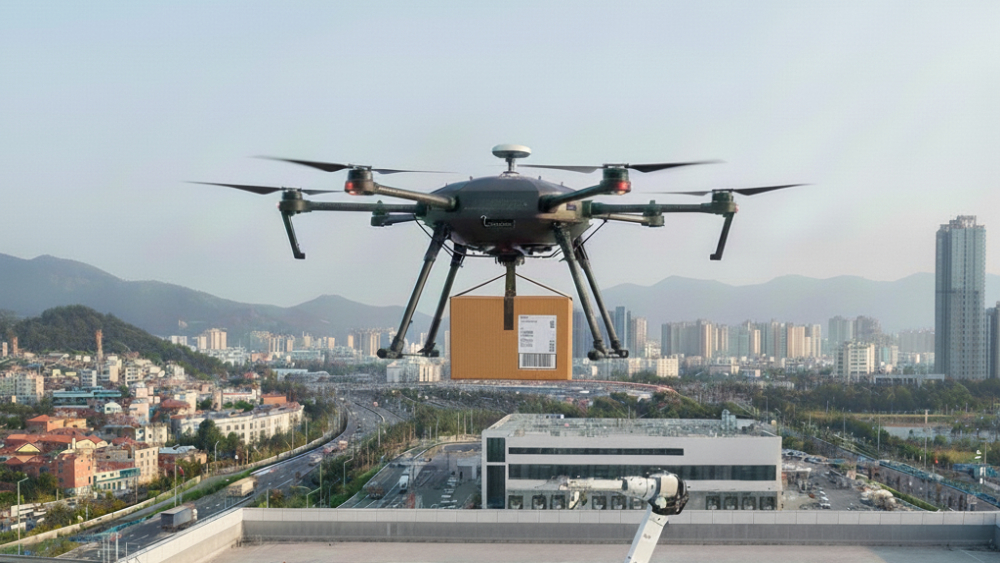
Logistics spaces are being redefined, as highlighted in the recently presented Quaderno 33 of the Freight Leaders Council. The future of the sector points towards an integrated system aimed at combining three operational dimensions – ground, air, and orbit – to make logistics more efficient. In this "three-dimensional" scenario, the use of drones, cargo aircraft, and satellites will be central and synergistic.
The drone sector: from experimentation to operation
Particularly in the drone sector, the logistics market stands out as one of the most active in experimenting with their potential. This interest is driven by expected benefits, such as shorter delivery times, access to hard-to-reach areas, reduced operational costs, and, above all, the ability to meet the growing demands of e-commerce and just-in-time services.
According to the analysis in Quaderno 33, these are the main and most mature application fields for cargo drones:
- E-commerce and Last Mile (B2C): The goal is to make quick deliveries in congested urban areas, reducing van traffic and emissions, especially for small packages. Drones can connect logistics hubs to automated collection points (lockers).
- Medical-Healthcare Transport: This is one of the most mature and prioritized uses in Italy and globally. It concerns the urgent transport of medicines, blood, organs, life-saving devices (...) between hospitals or to areas difficult to reach by traditional means.
- Middle Mile: Connection between logistics hubs and secondary distribution centers to alleviate classic transport.
- Remote Areas and Islands: Drones ensure logistics continuity for isolated communities (smaller islands, mountain areas) by overcoming geographical barriers and service interruptions.
The crucial factors: technology and regulation
The maturity of the sector is driven by two crucial factors:
- Technical evolution: The evolution of drones – in terms of battery autonomy, payload capacity, navigation systems and, above all, safety standards – has made it possible to envision new uses for this technology that were previously difficult to achieve.
- Evolved regulatory framework: The regulatory framework, still consolidating at the European level (EASA), is progressively opening up spaces for regulated experimentation. In Italy, "sandboxes" (such as those in Pianabella or San Salvo) are being created, which are protected experimental environments that allow testing innovative solutions (like VTOL aircraft - VCA in Italian text) and implementing U-Space – the digital airspace dedicated to safe drone traffic management.
Added to this is the growing interest from large private operators, innovative start-ups, and public institutions that have launched numerous pilot projects. In this respect, Italy is positioned among the most innovative players at the European level, but adequate infrastructural and regulatory development will be necessary to accompany the sector's growth.
The challenges of the future: from niche to mass market
Despite the progress, the sector must face some critical issues to move from an experimentation phase to full operation:
- Technology: Limitations related to battery autonomy and payload capacity that currently restrict use to short distances and light weights.
- Safety and social acceptance: The need to ensure safety and integration in urban areas (anti-collision systems, noise reduction, maintenance protocols)
- Economic Sustainability: Drones must integrate into existing logistics chains not only as a premium service, but by reducing overall operational costs to be competitive compared to traditional means.
In this evolutionary path, the role of institutions, businesses, and research is decisive. Clear rules, targeted investments, strategic vision, and the ability to work as a system are needed.
Focus on urban air mobility at Dronitaly 2026
Within the framework of the XI edition of Dronitaly (March 11-13, 2026, Ex GAM - BolognaFiere Congress Centre), the topic of integrating remote-controlled vehicles into urban space will be the subject of a roundtable discussion in which experts from institutions, companies, universities, and associations will debate current scenarios and future opportunities.
Three days dedicated to exhibition, conferences, technical tables, and networking, to present the most advanced technologies and foster targeted B2B and B2G relationships aimed at developing new partnerships, projects, and market opportunities.
The ideas and opportunities born during the previous special event at Brasimone, in September, will be the starting point for this second appointment, which will delve into and develop the main themes of the world of civilian professional-use drones and their applications.
Stay constantly updated on all new technologies, calls for tenders, and sector regulations
Participate in Dronitaly 2026
From March 11 to 13, 2026, at the Ex GAM, BolognaFiere Congress Centre, the eleventh edition of Dronitaly, the only international exhibition in Italy for civilian professional-use drones, will take place.
A concrete opportunity to explore the entire professional drone supply chain, get updated on the latest technologies, and forge strategic partnerships.