EN
EN  it
it

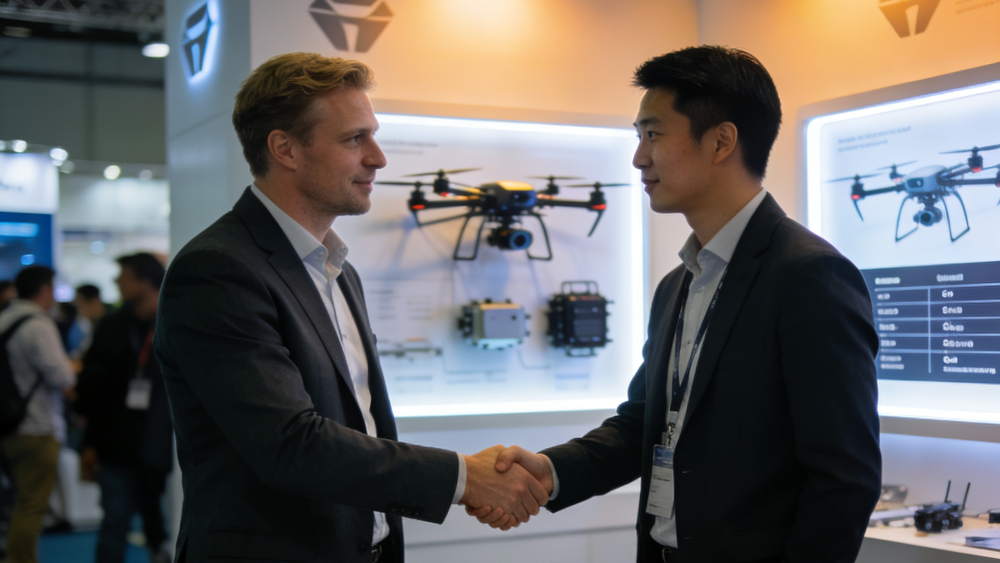
The interview published in the May 2026 issue of Drone Magazine, a Korean publication specialising in the evolution of drones, advanced air mobility, AI, robotics and industrial applications in agriculture, logistics, defence, construction, delivery and transport, forms part of the dialogue initiated by Dronitaly with the Korean market as early as 2024, including the initial contacts and the participation of Korean associations in the collective exhibition organised by KOTRA.
In the interview, Nicola Nizzoli was invited to provide an expert perspective on the Italian professional drone market: an ecosystem that is moving from experimentation towards operational use, with increasingly concrete applications in agriculture, logistics, security, public services and industrial activities.
The dialogue with the Korean publication, a Media Partner of the most recent editions and already confirmed for the 2027 edition, recognises the role of Assorpas as an authoritative voice within the Italian professional drone industry and of Dronitaly as a leading platform for dialogue among businesses, institutions, researchers and professional operators.
Below is the English translation of the article.
Growth in the Italian Drone Industry Driven by Agriculture and Services
Assorpas — Italian Light RPAS Association
Nicola Nizzoli, President
Sangjoon Kim / joon1817@kdrm.kr
Amid the rapid transformation of the European drone industry, Italy is emerging as a country of particular interest due to its service-oriented drone ecosystem, centred on sectors such as agriculture and logistics. Rather than being limited to hardware sales, the use of drones is expanding into concrete industrial applications — including agriculture, security and logistics — leading to the development of a new market structure that integrates the public and private sectors.
In particular, Italy has developed a strong competitive position in Europe in terms of regulation, operational experience and public-sector use, and is widely regarded as a country set to play a significant role in the future global drone market.
In the May issue of Drone Magazine, we conducted an in-depth interview with Nicola Nizzoli, President of Assorpas, the Italian Light RPAS Association, to understand the current state and future outlook of the Italian drone industry, as well as the opportunities that Korean companies should monitor closely.
Could you briefly introduce yourself before we begin the interview?
My name is Nicola Nizzoli and I am President of Assorpas, Italy’s leading trade association representing manufacturers, operators, consultants, pilots, training centres and the entire sector value chain. Assorpas is a member of JEDA, and I personally serve on the Advisory Board of the Polytechnic University of Milan and the Permanent UAS Technical Group of ENAC, the Italian Civil Aviation Authority. I am also President of Dronitaly’s Technical and Scientific Committee. In addition, I am a partner and Sales Director at FlyValue, a European aviation consultancy operating comprehensively across both crewed and uncrewed aviation.
Could you provide an overview of the current trends in the Italian drone industry? We would greatly appreciate your perspective on the key characteristics that define the sector today.
The Italian drone market is expanding rapidly and continues to grow steadily. The civil sectors on which we are currently focusing are experiencing strong development in three main areas: agriculture, where drones are increasingly used for monitoring, crop analysis and advanced land-management activities; private security, with the growing use of aerial systems for surveillance, perimeter control and operational support; and transport, both in the healthcare sector for the delivery of medicines, biological samples and urgent materials, and for the transport of small goods.
The sector is also developing strong public-private collaboration, with public administrations relying on the private sector not only to purchase drones, but also to obtain operational services, thereby fostering a dynamic and rapidly evolving ecosystem.
Could you briefly outline the regulatory framework for the drone industry in Italy and highlight any areas for improvement?
As an EASA member state, Italy has fully implemented the European regulatory framework governing unmanned aircraft systems. This framework requires continuous updates and refinements, both because the underlying technologies are evolving rapidly and because the expanding services market continually introduces new operational opportunities. Unfortunately, current regulations are often overly restrictive and slow to adapt, which hinders sector growth and discourages investment.
Could you explain which sectors account for the largest share of the drone industry in Italy and which areas play a leading role?
In Italy, agriculture and logistics are rapidly gaining market share, but historically the use of these systems has been strongly linked to surveying activities and emergency operations. In the defence sector, investment is increasing significantly, particularly in counter-drone systems.
In your view, what forms of cooperation and which key challenges must be addressed to further advance the drone industry at European and global level?
At European level, it is essential to make it easier to operate quickly and efficiently across all EASA member states. Although regulations are harmonised, in practice specific authorisations from individual states are still often required. In the global market, there is a clear need for stronger partnerships, particularly in battery development and the availability of diversified platforms, which currently remain too dependent on a very limited number of manufacturers.
In which areas do Italian drone companies demonstrate strong competitiveness? We would also appreciate your perspective on their main strengths.
Before the introduction of a common EU framework, Italy was the first European country to establish its own national drone regulations. It was also the first in Europe to develop a five-year aviation development plan, recognising the strategic importance of the UAS sector within its broader growth trajectory.
Italy certainly demonstrates strong competitiveness in the operational use of these systems, thanks to its extensive experience and the wide range of services developed over time.
How important is the drone industry in Italy, from your perspective?
The drone industry in Italy is strategically important, economically significant and increasingly central to both public and private innovation. It strengthens national capabilities, supports industrial modernisation and positions Italy as an influential player in the evolving European UAS ecosystem. Italy is positioning itself as a European leader thanks to advanced regulations, including Europe’s first U-space airspace, which supports complex operations such as BVLOS flights, logistics trials and urban air mobility. This highlights the institutional recognition of drones as essential tools for modern public services.
What key changes have you observed in the Italian drone industry? We would also appreciate your perspective on the sector’s future direction.
The sector has finally started to establish solid foundations for its development, becoming increasingly attractive to investors. The level of professionalism and training has improved, strengthening the entire value chain. The future will certainly depend on the ability to transform the experimental projects carried out to date into fully structured services: these will no longer be isolated use cases, but established, everyday operations.
In which areas do you believe Korean and Italian drone companies could achieve the greatest synergies? We would also appreciate knowing whether you are open to such cooperation.
I sincerely hope that a path of cooperation between Italy and Korea can begin. As the leading event dedicated to the sector, Dronitaly represents an excellent platform for fostering this cooperation. The most promising areas concern the development of new aerial platforms and sensor technologies: Italy has limited domestic production, and strong partnerships with countries that possess manufacturing capabilities and technical know-how in these areas are essential.
What preparations should Korean companies make to cooperate with Italian drone companies or enter the Italian market?
They should focus on offering alternatives to the products that currently dominate the market, both in terms of UAS platforms and payloads. Italy suffers from a lack of diversified options and, as an end-user market, represents a highly attractive opportunity. We are the leading European country in terms of active and operational professional drone systems.
Could you share your impressions of Dronitaly 2026?
The eleventh edition of Dronitaly in 2026 was widely recognised as the most successful edition to date. For the first time, ENAC — the Italian Civil Aviation Authority — had its own exhibition stand. Numerous companies took part and the events were consistently well attended. Many businesses succeeded in establishing highly productive partnerships and collaborations.
What would you say are the main reasons why Korean companies should participate in Dronitaly 2027?
There are many reasons, but the real value of participating in Dronitaly lies in the opportunity to establish genuine collaborations and develop joint commercial initiatives. It is the only event in the sector that offers genuine business opportunities. Anyone seeking to enter the sector — or strengthen their presence within it — cannot afford to miss this event.
Finally, please feel free to share any additional thoughts or messages regarding the drone industry as a whole.
Italy represents a rapidly growing market, but it is particularly focused on services and has a strong need to identify reliable and highly qualified partners in both hardware and software. Establishing relationships with such a rapidly expanding market can be highly valuable.
Source: Drone Magazine / KDRM — www.kdrm.kr