EN
EN  it
it

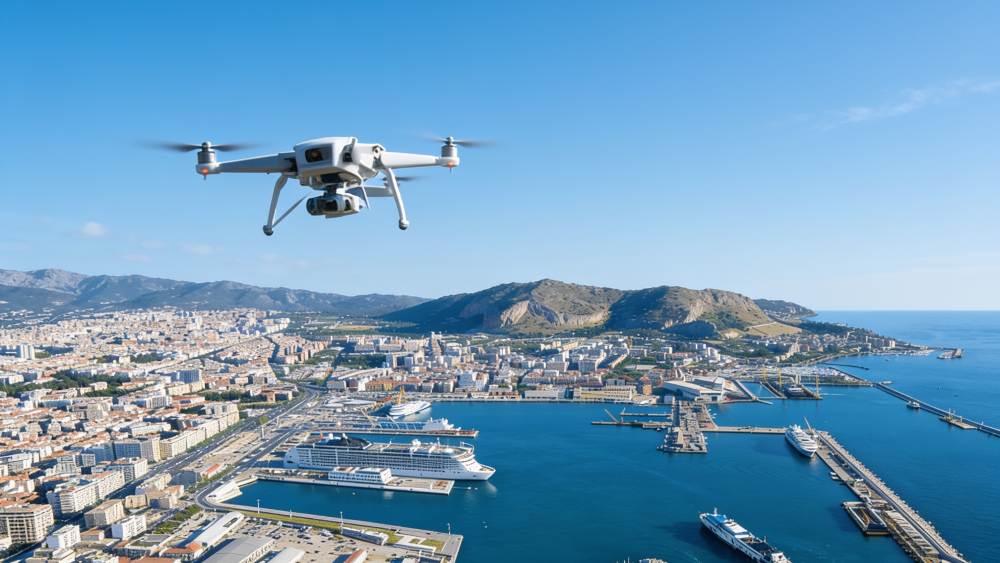
Across the international landscape, drones are increasingly becoming essential tools for the management of critical infrastructure. The launch of projects developed in collaboration with industry companies responds to widespread needs for monitoring, surveillance, maintenance and, more broadly, improvements in the operational efficiency of these complex and strategically important assets.
In Italy, the Port of Palermo recently launched a programme aimed at integrating drones into its activities for infrastructure monitoring, port security, the inspection of docks and vessels, environmental monitoring and emergency management.
The significance of the initiative does not lie solely in the individual applications envisaged. The project addresses a broader issue: how to integrate UAS into the routine processes of a complex infrastructure, coordinating technology, regulation, data management and organisational responsibilities.
From individual flights to integration into port operations
Professional drones are already used across numerous sectors for surveying, monitoring and inspection activities. The next stage in their development concerns the ability to transform these applications into continuous and repeatable services that are fully integrated into corporate procedures.
A port combines logistics, maintenance, environmental and security activities. In this context, a drone can help speed up inspections, collect information in areas that are difficult to access, reduce personnel exposure in potentially hazardous situations and provide valuable data during emergency response operations.
However, operational value does not derive from the aircraft alone. To produce results that can be effectively used, each mission must be incorporated into a process that includes flight planning, verification of applicable authorisation requirements, data collection and analysis, and the transfer of information to the relevant departments.
The drone is therefore not regarded as a tool intended for occasional interventions, but as a component of an integrated operational system.
U-space as an enabling framework
This is the context in which the process launched to establish U-space within the port should be interpreted. U-space is the European system designed to enable the safe integration of drone operations into airspace where multiple users must be coordinated and information must be shared.
The services envisaged include mission authorisation, network identification of aircraft, access to information on geographical restrictions and awareness of traffic within the airspace.
Within a port, these tools can help establish more structured coordination between UAS operations, ground activities, maritime traffic and other airspace users. This represents a significant transition: the objective is not merely to authorise individual flights, but to create an environment in which operations can become more frequent, predictable and interoperable.
The project is also taking shape during a period of regulatory development in Italy. On 24 June 2026, ENAC opened a public consultation on the draft Regulation concerning UAS Geographical Zones, with the consultation period scheduled to close on 24 July 2026.
UAS Geographical Zones make it possible to establish conditions, requirements and restrictions for drone operations in areas characterised by specific safety or airspace-management needs. Before each operation, the operator must check the restrictions applicable to the relevant area using the information published through official systems.
For ports, airports and industrial sites, defining these zones therefore represents an essential step towards ensuring that operations are consistent with the characteristics of the infrastructure and the responsibilities of the parties involved.
The CER Directive and the resilience of critical infrastructure
The issue becomes even more significant in light of the CER – Critical Entities Resilience Directive, which concerns the resilience of entities providing essential services.
Directive (EU) 2022/2557 was transposed into Italian law through Legislative Decree No. 134 of 4 September 2024, which entered into force on 18 October 2024. The implementation framework requires critical entities operating in the relevant sectors to be identified by 17 July 2026.
The sectors covered include transport, alongside energy, water, healthcare, digital infrastructure and other services essential to the functioning of society and the economy.
The Directive focuses on organisations’ ability to prevent and mitigate risks, protect infrastructure and services, detect incidents promptly, guarantee operational continuity and restore activities following a critical event.
In 2026, Italy also adopted the National Strategy for the Resilience of Critical Entities and launched the related Interministerial Committee, marking the transition from the regulatory phase to implementation.
Within this framework, drones can provide tangible support through the monitoring of sensitive areas, the inspection of structures that are difficult to access, real-time data collection and the assessment of infrastructure conditions following a critical event.
However, their contribution to the resilience of critical infrastructure depends on their effective integration into security plans, emergency procedures and corporate processes. The Palermo case can therefore be viewed not only as a technology project, but also as a potential application of UAS in support of prevention, monitoring and operational response.
From monitoring to healthcare logistics
The protocol launched at the Port of Palermo does not concern only infrastructure monitoring and inspection activities.
According to the Western Sicily Sea Port System Authority, the initiative is connected to Droneport Sicily, a project designed to study drone-based healthcare transport services between ports and islands, with particular emphasis on territorial continuity.
In operational terms, this means assessing the use of UAS for the rapid transport of medicines, biological samples, medical devices and other high-priority healthcare materials to territories where conventional connections may require more time or depend on maritime traffic and weather conditions.
The port would therefore perform a dual function: on the one hand, it would be an infrastructure asset requiring monitoring and protection; on the other, it could become a logistics hub for new advanced air mobility services.
However, making such a connection operational requires more than a drone capable of transporting cargo. It requires authorised routes, procedures for preparing and delivering the cargo, coordination with healthcare facilities, airspace management and service continuity.
The responsibilities of the parties involved, safety requirements, compatible weather conditions, tracking methods and the procedures to be followed in the event of a mission interruption must also be clearly defined.
The connection with Droneport Sicily therefore broadens the scope of the Palermo project: from drones used to observe and manage infrastructure to drones deployed to support the delivery of an essential service to island territories.
Dronitaly: a forum for the development of UAS
The Port of Palermo project brings together several of the key issues shaping the development of the sector: the use of drones in critical infrastructure, the development of U-space, resilience, data protection, new professional skills and advanced logistics services.
These issues are also relevant to airports, utilities, energy infrastructure, transport networks, public authorities and essential-service operators.
Dronitaly promotes discussion around this convergence of technology, regulation, organisation and skills.
The event serves as a meeting point for companies, institutions, universities, research centres, operators and professional users, encouraging dialogue on the conditions required for the effective adoption of UAS. Dronitaly’s mission is to provide a platform for research and innovation by presenting the latest and most relevant practical applications and connecting solution developers with the organisations responsible for integrating these technologies into their operational processes.
Projects such as the one launched at the Port of Palermo contribute to this discussion by providing practical case studies from which useful insights can be drawn for the development of safe, regulated applications integrated into corporate processes, enabling operations to be conducted in a continuous, authorised and interoperable manner that is consistent with the organisation’s responsibilities.
Sources
Western Sicily Sea Port System Authority
Port of Palermo: process launched for the use of drones
ENAC
Consultation on the draft Regulation on “UAS Geographical Zones”
ENAC
Drone flights: airspace restrictions and reservations
EASA
U-space
European Union
Directive (EU) 2022/2557 – Critical Entities Resilience
Official Gazette of the Italian Republic
Legislative Decree No. 134 of 4 September 2024
Presidency of the Council of Ministers
First meeting of the Interministerial Committee for Resilience
Department of Public Administration
Strategy for the Resilience of Critical Entities
Sicilian Regional Government
STEP Notice – Strategic Technologies for Europe Platform
Roma Tre University
Second-level Master’s Degree in Advanced Air Mobility